Port is part of a triptych* of self-portraits about my memories from when I had cancer at age 14. A lot of medical experiences and journeys can result in feeling dehumanized, objectified. Port focuses on the wires and tools, with no identifying features of the figure. The background contains scans of old documentation from my own treatment. Though it’s a drawing of myself, the sense of identity is purposefully removed. It reflects my feelings of emotional detachment. Essentially, it’s an attempt to capture that strange dissociation that occurred while I was in treatment.
*Artwork made up of three pieces or panels
Holly is a recent graduate of Seneca College’s illustration program. They find solace in expressing thoughts through line. You can find more of their work at congercine.com.
Check out Creative Corner work done by Josh and Kathleen
From the Perspective of a Childhood Cancer Survivor – Leigha Bartholomew
Leigha Bartholomew, childhood cancer survivor
Being a childhood cancer survivor, I know what it is like to fall behind in school. Months of my schooling were spent in a hospital and attending weekly medical appointments. I began to feel overwhelmed thinking I’d never be able to catch up or that I wasn’t doing as well as my peers. It was never expected that I would be at the same level as everyone else while I was going through treatment, at the time I believed I just wasn’t good enough. I’m sure a lot of cancer survivors have felt the same way at one point or another.
I had a similar feeling when post-secondary schools introduced a virtual learning environment in the midst of the pandemic. I started noticing a shift in my capabilities. A new learning atmosphere meant new challenges that I couldn’t adapt to as quickly as I had in the past. Attending classes became more difficult, focusing on work and remembering to finish assignments on time developed into more of an issue than it had been just a few months before, and my motivation to be involved in class discussions decreased. On top of that, I couldn’t bring myself to speak with my professors over Zoom about the challenges that I was facing. It seemed like I was in a rut and I didn’t know how to pull myself out.
My ADHD diagnosis came just a few months after we started learning virtually. While I was familiar with ADHD, I was surprised to learn that I had the disorder myself. Adding this on top of the other issues I had with mental health (I was diagnosed with Generalized Anxiety Disorder in high school) was not something I had even considered, especially so far into my education. If someone were to look at my grades, I bet they wouldn’t have considered it either. Luckily, I didn’t have to go through these challenges all on my own.
Because mental health and learning disabilities pose a challenge for a number of young people, there are resources that have been put into place by schools to help students get through their education. In post-secondary school, there are learning strategists or assistive/adaptive technologists for students seeking academic support. Your academic advisor is also available to help you find programs or services tailored for your specific challenges.
Being a childhood cancer survivor can further complicate things. While some survivors may already be predisposed to having mental health and learning challenges, others can develop them due to the treatments they received or other related factors and experiences. These issues can also continue into adolescence and adulthood. Since most people working in pediatric oncology are aware of these challenges, there are specific resources available to survivors and their families. POGO AfterCare Clinic professionals, such as counsellors, art therapists, clinical psychologists and social workers are some of the resources available to help cancer survivors develop strategies related to the difficulties they might be facing with school or everyday life, and POGO School and Work Transitions Counsellors can help you to access these various resources!
My advice to fellow survivors would be to understand that you are not alone if you find yourself struggling. I am sure a lot of people can relate to me when I say that I prefer in-person schooling over the virtual classroom, but that doesn’t mean it’s any less scary having to make the transition. If my own experiences have taught me anything, it’s that everyone has a different style of learning. If you need help, reach out. No matter how difficult things might seem, there are always people and programs available to students and survivors if they need help.
Austin: What was it like battling cancer as a young teen?
Eloise: I was 14 years old when I was diagnosed with cancer, just weeks shy of starting my Grade 10 year. I was already trying to grapple with big questions like, “Who am I?” and “Who do I want to become?” I was busy navigating life and all things that “normal” teenagers experience. Then, on top of this quest for identity, I was suddenly confronted with a life-threatening illness. I felt overwhelmed, confused and defeated. I had no idea how to react or how to feel. There is no better way to describe it than an absolute rollercoaster of emotions.
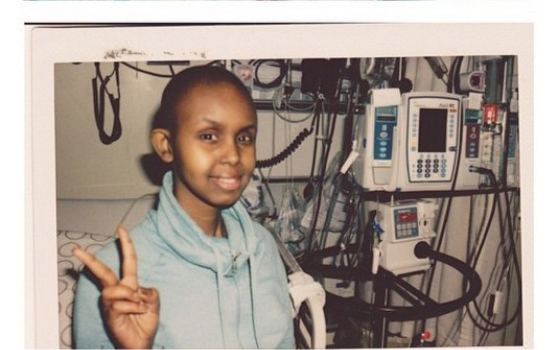
In my opinion, the fundamental difference between young kids going through cancer and teens, is their sense of awareness. Unlike many young kids next to me on the 8th floor of SickKids, I KNEW something was wrong. Actually, I knew EXACTLY what was wrong. I had cancer—a disease I never imagined I would have, especially at 14.
Many brave young children I encountered accepted this painful journey with a sense of “normalcy.” Despite all they were going through, they maintained their positivity and love for life. This was something I could not mirror—not for lack of trying. I wanted to exude the same level of strength, courage and positivity as many of those children but I was keenly aware of my painful, frustrating and exhausting journey with cancer. People sometimes forget that teenagers are far closer to identifying as adults than they are to children, yet, they are unique and require a certain approach to their care.
Austin: In what ways does your journey with cancer still impact you today?
Eloise while undergoing treatment
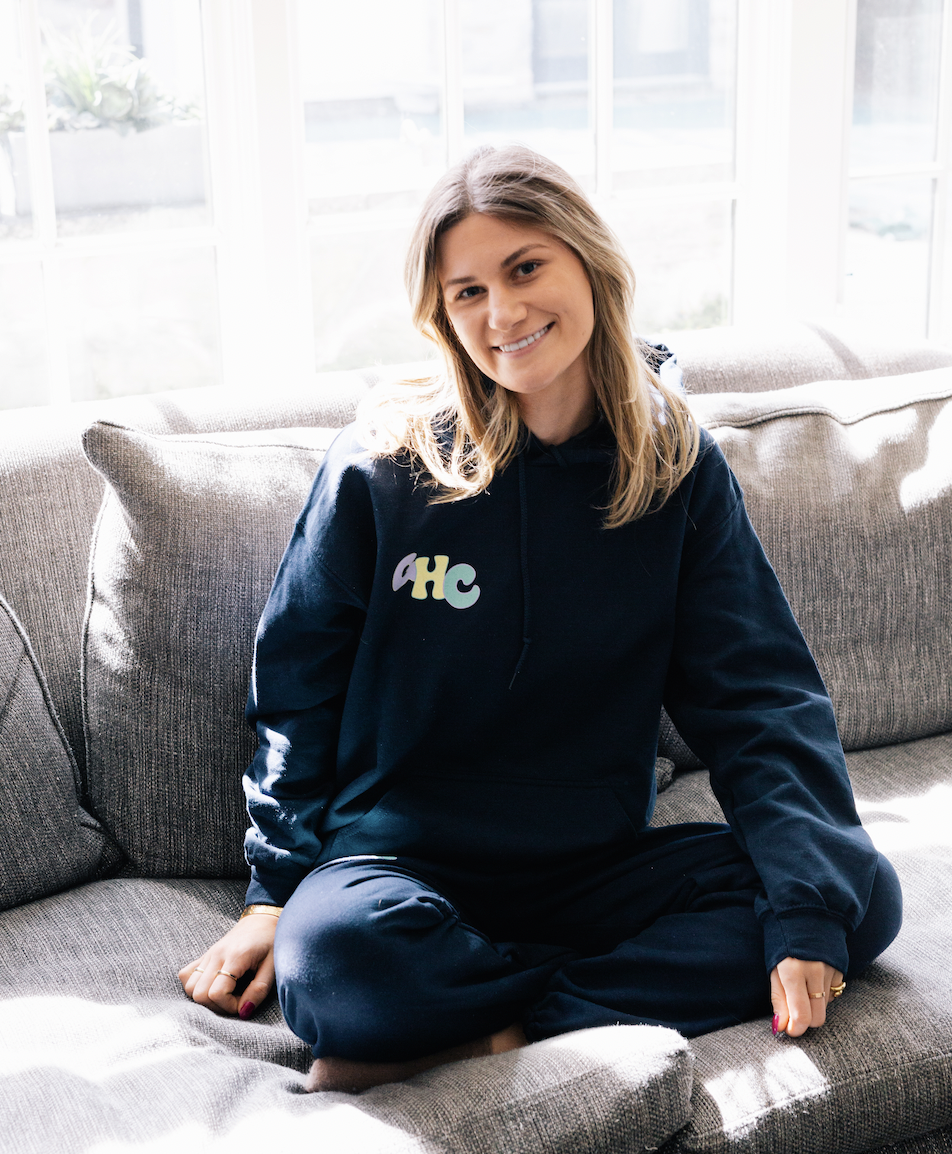
Eloise: Despite being cancer-free for nearly eight years, my journey through survivorship has been far from easy. Cancer continues to influence many areas of my life, both positively and negatively. On a professional level, I have built a career inspired by my experience. The Good Hood Club is a loungewear company that champions childhood cancer care, most notably by donating 50% of its profits to childhood cancer organizations like POGO. Given my journey and fortune with cancer, I constantly seek ways to give back. The Good Hood Club has provided me with a vehicle to do that.
Although cancer is a “distant memory,” the emotional turmoil it sparked is not. Daily, I battle anxiety primarily linked to having had cancer as a teen. This has been an ongoing challenge for me; however, I am committed to finding ways to help me manage it. More abstractly, cancer has taught me many invaluable life lessons. Undoubtedly, my biggest takeaway has been my appreciation and love for life.
Austin: How did you decide to start Good Hood Club as a business and how did you come up with the name?
Eloise: While studying commerce at Queen’s, I took a digital marketing class in my 3rd year. One of the projects required us to create an e-commerce-based business from scratch. While most of our classmates saw this as merely a school project, my group saw it as an opportunity to do something good. My best friend, Chloe, and I wanted to create something meaningful. We thought, “What can we sell that will do good?” Our answer, “Hoods.” We also wanted people to feel part of a more significant community, a club. Hence the name, Good Hood Club.
Eloise in her navy Good Hood hoodie
Austin: What does Good Hood Club mean to you, both on a personal and a professional level?
Eloise: On a professional level, I could not have asked for a better way to dive into the workforce. I have gathered experience across various areas. I have had unparalleled hands-on experience in marketing, operations, strategy, manufacturing, finance…you name it! I am incredibly grateful for the experience Good Hood Club has given me to date. Over time, I hope to watch the company grow, continuing to touch the lives of those battling childhood cancer.
On a personal level, Good Hood Club has been an invaluable healing method. The easiest way to deal with my pain is by transforming it into purpose. Good Hood Club has allowed me to do this, and for that, I am eternally grateful.
Austin: Do you think as a survivor of childhood cancer that there are enough support systems in place to help families and children?
Eloise: I think that there is always room for improvement. However, I am eternally grateful for the help and support I have received over my journey. The childhood cancer community is filled with exceptional individuals who have made invaluable contributions to the community. I would love to see additional resources in the realm of psychosocial support. For me, mental health has been a massive part of my journey with cancer; however, it has not necessarily been a massive part of my care. In my experience, cancer has been just as much a mental health disease as a physical one; yet, it is not treated as such. I hope for a future where both aspects are equally prioritized in cancer care protocols, right from the beginning.
Austin: Do you have any advice for young adults that survived childhood cancer that are struggling to find a career that will be fulfilling for them?
Eloise: It is easy to get caught up in what you think you want and should do versus exploring what you truly want and were meant to do. As a business student, I was on a path to a corporate career. I thought that was what I wanted. The second I took the opportunity to try new things and explore, I uncovered newfound passions I wanted to pursue. My advice would be to always experiment and try. Don’t stay committed to one path until you have taken the opportunity to see what else you might want to explore.
Eloise founded Good Hood Club with her university best friend, Chloe, to make their love for hoodies more meaningful and promote comfort during stressful times. 50% of Good Hood earnings go to POGO (Pediatric Oncology Group of Ontario) and their mission to achieve the best childhood cancer care system for children, youth, survivors and their families in Ontario and beyond.
Austin is an ALL survivor who is interested in music and is an avid drummer. He’s also passionate about giving back to cancer charities that helped him and his family during their cancer journey.
18-year-old Isla MacIntosh discusses how boxing helps her cope with her mental stressors
Isla MacIntosh, childhood cancer survivor
Taneisha: Can you tell me a little bit about yourself and your experience with childhood cancer?
Isla: I was diagnosed with leukemia when I was four years old and have been in remission since the age of seven. I work at a golf course in Ottawa and I just finished my first year in the Behavioural Science Program at St. Lawrence College.
Taneisha: Other than your family, does anyone else know about your diagnosis? Did you have to miss any school due to your cancer and its treatment?
Isla: My parents mentioned it to people they knew and our surrounding neighbours and, of course, my school knew. I missed kindergarten entirely so my first year attending school in person was in Grade 1. Everyone was very supportive.
Taneisha: Do you feel you continue to get the support you need?
Isla: My sister has done everything she could to support me ever since I was young. She pretty much gave up her childhood because of me. In my early teens, I realized how big my diagnosis really was, and I needed to find an outlet to relieve stress. At 14, boxing became that outlet. My whole family is supportive of my boxing.
Taneisha: How did you discover boxing?
Isla: I found this youth recreational boxing class in Ottawa where I grew up. The coach was the first female boxing coach. She was a big inspiration to me because she had cancer so I felt that I could relate to her. She also helped me find a great boxing school when I started going to school in Kingston. Now I train 3-4 days in person and on the other days, I do dryland training. Dryland training means conditioning, running, weights and other strength activities.
Taneisha: How did boxing help you with your mental health stressors and how did it help you get through your first year of college?
Isla: When I moved away for school in Kingston, I found a safe place for boxing with nice people, which helped me not worry as much about school. Boxing is very technical. When you are in the middle of it, you have to focus on boxing and nothing else. It takes you out of any stressful situation you might feel you are in.
Taneisha: What are your goals—both for boxing and your education?
Isla: I like to compete so my goal for boxing would be to go to nationals. My goal for school is to find a full-time job that relates to behavioural science.
Taneisha: Do you have any advice for other childhood cancer survivors who are going through something similar to what you are going through?
Isla: My advice would be to find an outlet that is important to you, especially if you are older and there are external pressures. It could be sports, music or something else. An outlet can be a safe place for you to express yourself.
Taneisha Kandiah was diagnosed with leukemia when she was 18 months old. She has been in remission since the age of three. She recently graduated from the University of Ottawa in life sciences.
Kafia Ibrahim is a registered nurse whose personal experience as a two-time childhood cancer survivor inspired her career path. She works in the haematology/oncology unit at The Hospital for Sick Children (SickKids) in Toronto and attributes some of her success to touchpoints she had with a POGO Interlink Nurse while in treatment and a POGO Counsellor after treatment.
Kafia was diagnosed with rhabdomyosarcoma, a soft tissue cancer, when she was eight years old. Her treatment involved chemotherapy and radiation. At 15, Kafia relapsed and faced a second diagnosis of another soft tissue cancer. This time, surgery and chemo were part of her treatment protocol.
“I was too young to remember the details,” Kafia says “but I know that from the time I was diagnosed, my family had very positive experiences with Tina, my POGO Interlink Nurse. I attended Campfire Circle (formerly Camp Ooch and Camp Trillium) because of her and made lifelong friends, and she came to our home and connected us to many community and financial supports.”
After her treatment ended, Kafia faced many challenges pursuing her academic and career goals.
“Those challenges were a result of the side effects of treatment,” she explains. “With nothing to control my pain and the resulting negative impact this had on my mental health, it took me longer than usual to finish high school. In Grade 10, I went from online school, to alternative school and back online. I utilized many of the services of the POGO School and Work Transitions Program during this time. When I was finally able to finish high school, my POGO Counsellor, Lucie, helped me with my university applications. She also notified me of scholarships that I would be eligible to apply for, and I received one from Childhood Cancer Canada. My POGO Counsellor also helped me get extra time for tests at school, something I didn’t even know was possible. She helped me know my rights and build my confidence to ask for what I needed. I don’t know if I would have done as well as I did if it were not for my POGO Counsellor.”
Wonderful nurses made an impact
While Kafia’s experiences through her cancer journey were not all great, the positive ones led to her career decision.
“I have had my fair share of experience with healthcare providers, especially nurses,” says Kafia. “I’ve experienced the good, the bad and the ugly. The amount of influence that nurses can have on a patient’s experience with their disease is more than one would expect. I still remember the wonderful nurses that helped get me through some of my hardest days. Whether it was singing my favourite song with me, celebrating my 16th birthday when I was in-patient or providing me with a shoulder to cry on when things got too much. I want to be able to provide this personal connection for another child and their family that may be going through a similar situation.”
From 2019 to 2020, while in her nursing program, Kafia had the opportunity to work as a clinical extern at SickKids. In this mentored nursing assistant role in the haematology/oncology unit, she gained invaluable experience. She got to know families and found many ways to offer them respite, like staying at their child’s beside so they could take a coffee break. Remembering how bored she was as a patient, Kafia made it a point to entertain her patients. She learned the importance of building trusted relationships. Also, working in the hospital where she had received treatment was a way to see if any underlying or unresolved emotions would surface that might get in the way of her career success. Thankfully, none did!
“This job allows me to meet the bravest people. I feel like my experience with cancer allows me to see the bigger picture when providing care to patients and their families. My career plans include becoming a POGO Interlink Nurse in 3 to 5 years and finding ways to better support the transition from pediatric to adult care for childhood cancer patients. When I see the impact that my care can have on patients, it motivates me to work harder.”
Kafia Ibrahim is a registered nurse at The Hospital for Sick Children. She earned her Bachelor of Science in Nursing from the Seneca/York Collaborative Program. She is a two-time childhood cancer survivor. Her POGO Interlink Nurse and POGO Counsellor inspired and supported her career goals.

 Port is part of a triptych* of self-portraits about my memories from when I had cancer at age 14. A lot of medical experiences and journeys can result in feeling dehumanized, objectified. Port focuses on the wires and tools, with no identifying features of the figure. The background contains scans of old documentation from my own treatment. Though it’s a drawing of myself, the sense of identity is purposefully removed. It reflects my feelings of emotional detachment. Essentially, it’s an attempt to capture that strange dissociation that occurred while I was in treatment.