POGO

  • Staff List
  • Contact Us

Main menu

Skip to primary content
Skip to secondary content
  • About Us
    • Our Mission and Vision
    • Childhood Cancer Care Plan
    • POGO Recognition Awards
    • POGO Land Acknowledgement
    • Diversity, Equity, Inclusion
    • Our Board
    • Our Partners
    • Our Donors
    • Privacy
    • Accessibility
    • Reports
    • Newsroom
    • Job Opportunities
    • Senior Leadership Team
  • Programs & Support
    • Patient Care Programs
    • Financial Assistance
    • Survivor Care
    • Cancer Resources
    • Inspiring Stories
    • Clinical and Program Advisory Committees
  • Education
    • POGO Multidisciplinary Symposium on Childhood Cancer
    • POGO Virtual Education
    • POGO AfterCare Education Day
    • POGO Satellite Education Day
    • Resources to Support Indigenous Families
  • Healthcare Practice
    • Pediatric Oncology Nursing
    • Clinical Practice Guidelines
    • POGO Satellite Manual
    • Pediatric Palliative Care
  • Research & Data
    • 2020 POGO Surveillance Report
    • POGO Research Unit
    • POGO Databases
    • Data Reports
    • Data Requests
  • Get Involved
    • Pajamas and Pancakes
    • Birthday Parties for POGO
    • Events
    • Volunteer
  • Ways to Give
    • Donate
    • Monthly Donations
    • Gifts of Stock and Securities
    • Become a Corporate Partner
    • Gifts in Honour/Memory
    • Legacy Gifts
    • Shop Online/Earn Cash Back

Blog

POGO > Blog > Transitions
[sharethis]

Transitions


Post navigation

← Older posts
Newer posts →

Internships: The ‘Intern’al Route to Success!

Posted on April 4, 2025 by Jamie Irvine

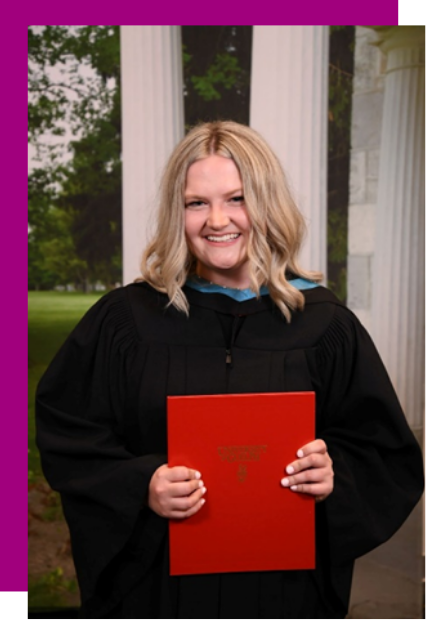
Author: Helen Antoniades interviewing Maryam Khraishi 

“The people were truly what made my experience so amazing, and having been able to work in such a supportive environment has set a precedent for the rest of my career.”
An internship can provide a powerful experience. At its best, it gives students real-world work experience, builds their confidence, helps them explore different careers and enhances their resume and contacts.

When an internship recognizes that childhood cancer survivors can have unique challenges in school and work settings, it can be even more impactful.

That’s why, when Emblem Developments/First Avenue Investment Council wanted to offer more than their ongoing financial support of POGO, they consulted with the School and Work Transitions Program to develop a paid summer internship program for childhood cancer survivors, which launched in 2024.

Because it is specifically for childhood cancer survivors, Maryam, last year’s intern, says, “It alleviated a pressure that everyone understood what I had been through; there was already an understanding that I needed time for physiotherapy every week and that I had certain mobility difficulties. The program was designed to fill the gaps in my experiential learning caused by missed work while I was undergoing treatment during my university education.”

Maryam had the opportunity to meet professionals in a variety of roles and learn about how an office environment works. She got instructions and feedback that can be applied to her current schooling and future career. And having conversations with staff about career, education and life provided valuable guidance on her future path. Additionally, Maryam says, “The internship being paid allowed me to focus completely on the work and alleviated the financial worries/pressure I had from tuition, rent and living expenses.”

The experience shows what the School and Work Transitions Program already knows: childhood cancer survivors have deep potential and can thrive in a work environment, when given the supports they need.  Maryam says, “The people were truly what made my experience so amazing, and having been able to work in such a supportive environment has set a precedent for the rest of my career.”
Posted in Transitions | Tagged The POGO School and Work Transitions Program, transition

From Survivor to Researcher: Exploring Life After Childhood Cancer

Posted on January 19, 2025 by Jamie Irvine

Interviewer: Rachel Martin, POGO Counsellor
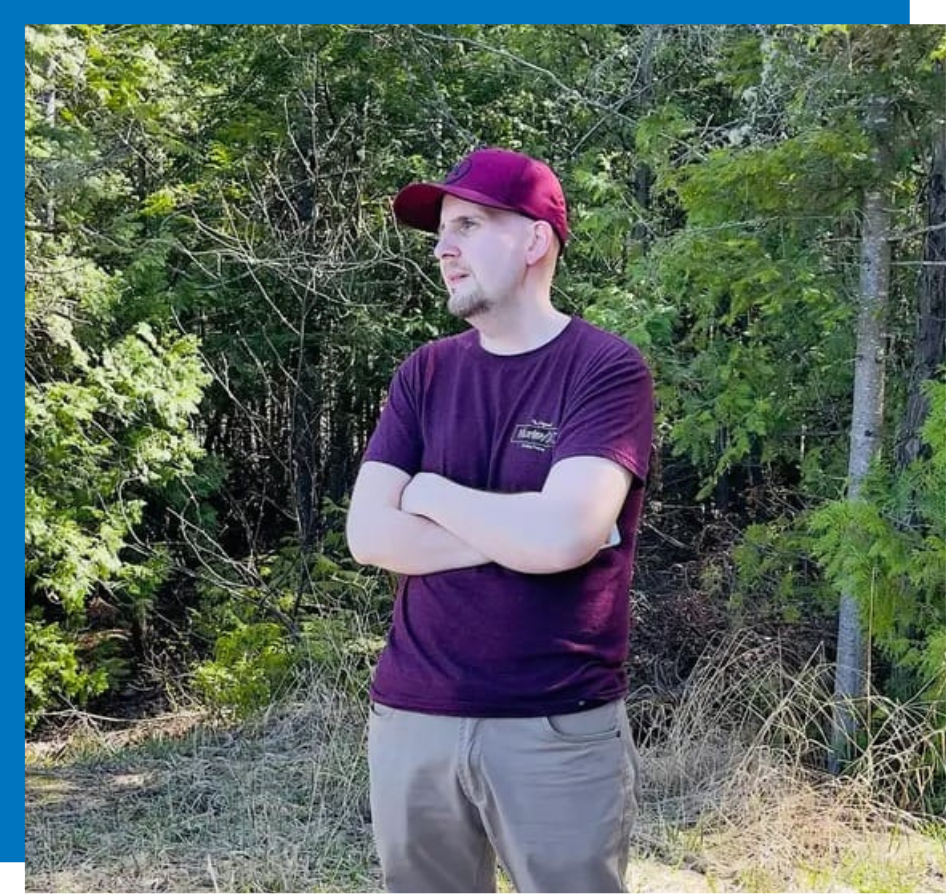
Interviewee: Josh McGonegal, PhD candidate, childhood cancer survivor

Written from the perspective of interviewer Rachel Martin
When I think of research, I think of numbers and long-winded articles written in a language that is difficult to understand. For Josh McGonegal, research has become something much more: a way to find meaning, connection with others, and hope for the future.

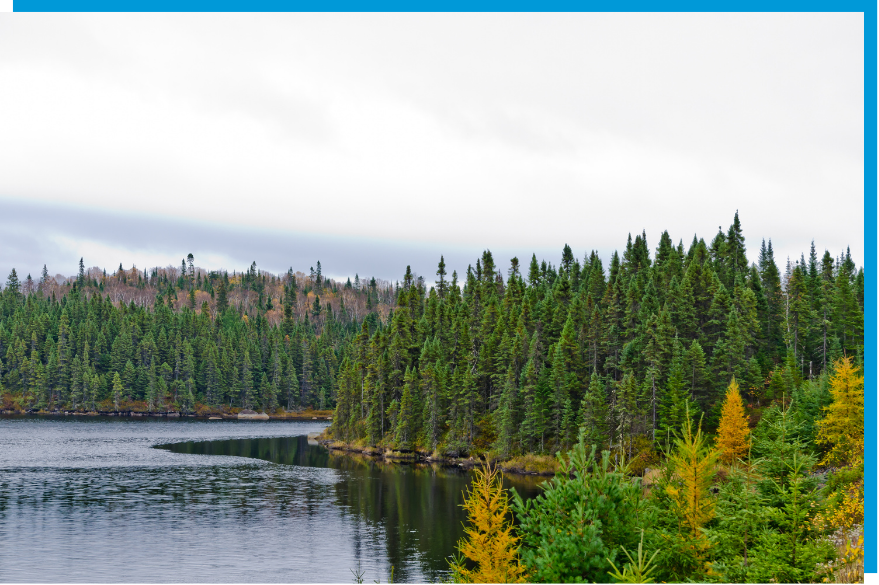
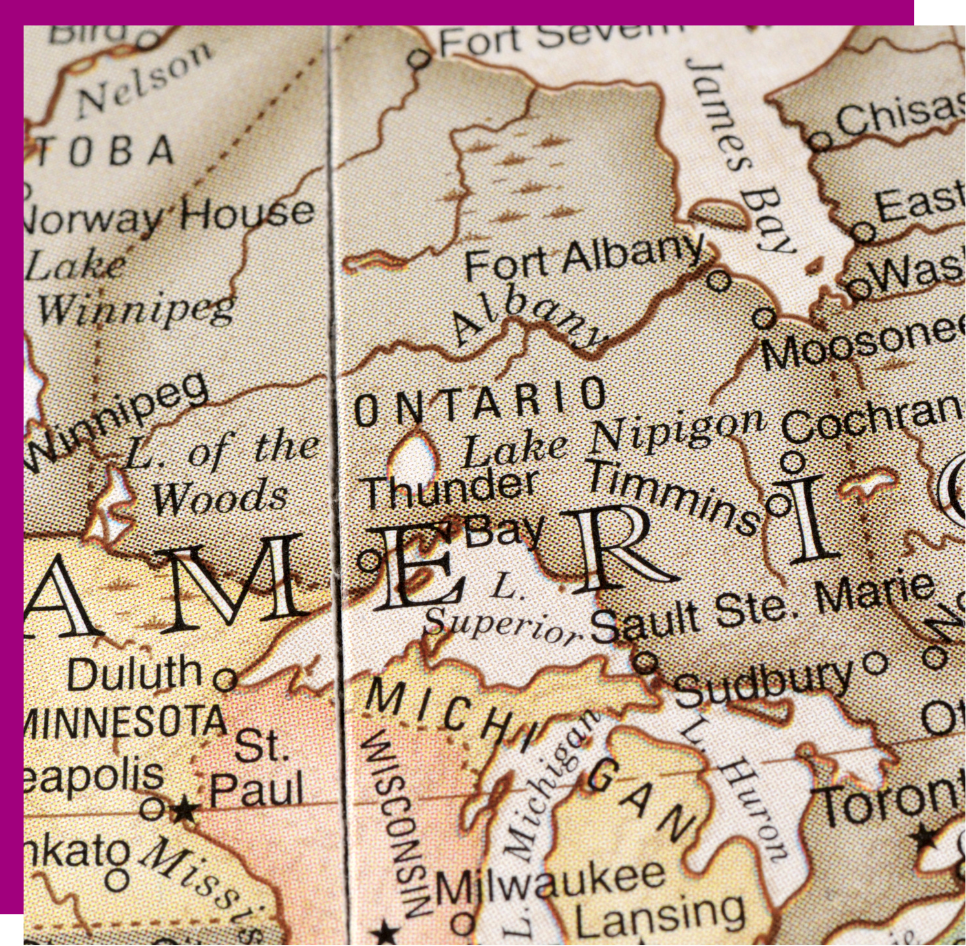
Josh’s life changed when he was diagnosed with cancer as a teenager, and it changed again when his family moved to the Northern town of Elliot Lake. The move took him six hours away from his friends, community, and medical care. Josh shared that it was difficult to make friends while also navigating the effects of his treatment as an older teenager. Although he was no longer on active treatment, he described the additional stress of having to travel back south to attend his follow-up appointments.

Attending university gave him a way to get back to his home community, but it came with new challenges, including navigating which supports and accommodations he needed to be academically successful. Josh expressed gratitude for his School and Work Transitions Counsellor, who validated his experiences and helped guide him through the system. While in school, he volunteered with the Brain Tumour Foundation of Canada and joined a local support group. Eventually, he started leading some of these groups. It was here that a professional suggested he look into the field of social work.

Although research was not what he originally envisioned for his life, he found himself enjoying the mandatory research class in his third year of his undergraduate degree. He got connected with the Canadian Association of Psychosocial Oncology. Around that time, he also began to struggle with the demands of his school placement. Unfortunately, the workload couldn’t be reduced to accommodate his needs. But hope returned when a professor invited him to join a research project to complete his placement credit. Josh has been involved in research ever since, and he shared that it allowed him the flexibility to work at his own pace.

“Together is the only way to make it better.” 

Fast forward several years: Josh is now back in Northern Ontario, pursuing his PhD at Laurentian University. Two years in, he’s currently recruiting participants for his study, which explores the follow-up care experiences and evolving sense of identity among adult survivors of childhood cancer living in the North. Through this work, he hopes to highlight not just the challenges of accessing medical care, cancer-specific programs, and peer support—but also the limited awareness many survivors have of these services.

A key goal of Josh’s research is to help healthcare providers better understand the realities of survivorship in Northern Ontario, where geography, travel distances, and infrastructure can have a major impact on care and quality of life. Ultimately, he hopes his findings will improve support for the next generation of survivors.

Because this is a qualitative study, Josh is collecting stories—not numbers. He emphasized that he isn’t just tracking how many follow-up appointments someone attends. What makes his research special is the way it focuses on the full person. Josh wants to understand people’s day-to-day experience of wellness—mental, social, and emotional—as it relates to survivorship in the North.

Josh noted that young adulthood is often viewed as a time of health and freedom. But his cancer diagnosis complicated this stage of life. He spent his early adulthood attending medical appointments and learning to accept the changes to his brain and body that treatment had brought. Like many survivors, Josh said he struggled with self-esteem and identity. Connecting with other survivors—people who “get it”—helped him feel less alone and more anchored in community. He cited the first POGO conference he attended, as well as the S2S group, as especially meaningful. He also spoke to the unique experience of being diagnosed as a child versus as an adult.

Now, Josh hopes his research can help extend that sense of connection to other survivors living in the North. Whether it’s connection to people or to services, he wants to understand how survivors are taking care of their whole selves in adulthood—and where the gaps might be. Josh wants people to know that every story matters. Even if your experience feels small, it’s still a piece of the larger puzzle he’s trying to complete. And if you’ve ever done a puzzle, you know how important every last piece is.

By participating in Josh’s research, you can help complete the picture of what life is like for adult survivors of childhood cancer in Northern Ontario—including their experiences with aftercare—and contribute to improving long-term supports for future survivors.

If you’re interested in participating and live in Northern Ontario, Josh encourages you to email him directly at jmcgonegal1@laurentian.ca. The study involves signing a consent form and completing a virtual interview, which takes about an hour. Josh is happy to make accommodations to help ensure the interview is accessible and successful. As a thank-you, participants will receive an Amazon gift card. And as with any study, you’re free to withdraw at any time.

Being an adult survivor of childhood cancer is a unique experience, and living in Northern Ontario adds another layer to this. If you are eligible, please consider sharing your story with Josh so he can put together a picture of what aftercare looks like in this area.

As Josh states “Together is the only way to make it better.”


Interview by Rachel Martin
Counsellor, POGO Transitions Program

Posted in Transitions | Tagged The POGO School and Work Transitions Program, transition

Plushies, Photography and a Story

Posted on January 19, 2025 by Jamie Irvine

Authors: Hailey Millard, Varun Sayal and Natasia Vernon


Author: Hailey Millard

Hi! My name is Hailey Millard, and I’m 20 years old. I had just turned three when I was diagnosed with acute lymphoblastic leukemia. It was a very long and hard battle that I fought. This November, I will be 15 years in remission!

I started knitting when I was 10. I picked up crocheting this past year and began trying to sell my creations on Shopify. I love to make stuffies! It’s my absolutely favourite thing to do.

I’ve struggled with anxiety my whole life, and knitting and crochet are two of the few things that quiet my brain. I also love helping people and putting smiles on their faces. So, when I give or sell my work, it makes me really happy that I can make someone smile or even help them through whatever struggle they’re facing.

Some of my favourite pieces that I have made include octopuses, turtles (big and small), pickles, T. rexes, brontosaurs, and even a snowman! I hope that whoever is reading this smiles at the pictures of my stuffies.


Author: Varun Sayal
Age of diagnosis: 17
Diagnosis: Ependymoma. Fortunately, it was benign. Most of the tumour was removed surgically, and the rest through radiation therapy.

Photography has not only become a creative outlet, but it has also served as my reminder to continue exploring. To continue pushing myself to my limits. To keep learning. But of course, reality kicks in, and health issues can challenge my ability to stay consistent. If there is one thing I have learned, as a photographer and through this whole journey, it is to make the best of whatever is in front of me.

Whether I am standing around and photographing a beautiful sunset sky with little to no effort or sitting down and placing the camera on my foot to get a better image of Lake Louise, this “playing the cards you have been dealt” approach certainly applies to my art.

This image has an empty alt attribute; its file name is Varun-Shore-1024x683.jpg

Author: Natasia Vernon
Diagnosis: Neuroblastoma
Age of diagnosis: 10 weeks

Trigger Warning: Difficult themes mentioned

Our Monster

There’s a monster in my belly. It caught hold of the inside of a body, tainted me a greyish hue of sick and made itself at home. Gripped so tight, the monster built a whole future for me out of my blood and bones. It’s happy here, settled in its infant form and whispered in the night, my voice so new to both of us; we only knew to cry.

It took up an insurmountable amount of space; the loudest, the biggest, the strongest. Until it met my mother. She held grief in her heart already, met a monster of a similar breed not long before and watched it pave its war path. When she held me, she could feel the weight of the monster, hear the shadows creeping from my skin, see icky green and poisoned cells; her child, now possessed. Her screams ripped through the hospital, cut right to the core of the monster and made it known. Our voices battling in the white walls of a sterile room, the monster forced to an uncertain hush.

At four years old and one bus ride away, a sister is waiting in a house I can’t remember. She hides behind closed doors, listening to the sound of fighting parents or to the claustrophobic quiet of our home. The same home where the father invited in strangers to fill a void that spread by way of viscous sorrow. My sister releases every last drop of salt from her body; she fills the entire house with enough tears to drown.

In a future that will feel a lifetime away, she will lock the door behind her and teach herself to swim. My father’s pain will disperse into the summer wind. My mother will bury her grief in a garden, and her screams will melt down to a prideful melody. The monster will have freed me. I’ll live the life it paved for me, learning to grow flowers from my scars.

Here, living in the empty room I share with the monster, my dad takes me from our crib. He holds me gently in his arms and listens as my heartbeat stills. My mother screams at the doctor that something is wrong. My sister plays with dolls, where she learns to translate life and death into make-believe. My dad grips tighter. My mom begs for flowers; discovers them sprouting from an old wound. Slowly. Steady. My heart.

Posted in Transitions | Tagged The POGO School and Work Transitions Program, transition

Post-Treatment Path

Posted on January 19, 2025 by Jamie Irvine

Author: Emily Burtwistle
Diagnosis: Ganglioglioma (at age 7)

My name is Emily Burtwistle, and I am a recent graduate of the Child Studies program at the University of Guelph, and I will be starting at Western University to pursue my Bachelor of Education. While I am not a poet, I felt passionate about sharing this poem I wrote to shed light on some post-treatment struggles that may resonate with others. 

I was diagnosed with my tumour at the age of seven, and I’ve been in “remission” since 2012. I cannot stress enough how grateful I am to be in remission, and how sad I am that some friends are no longer here to celebrate that milestone themselves. That said, “survivorship” has brought many unforeseen challenges that I have had to adapt to—from insecurity and anxiety to depression over not feeling like a “normal” teen. Each MRI and follow-up appointment, and each academic or accessibility issue (for example, I have a special waiver from the Ministry of Transportation that allows me to drive with reduced vision), reminds me that I am still on this journey. 

The world expects I now should fly—
But most days, I’m just getting by.

The reason that I decided to share this vulnerable poem is to spread awareness that the journeys of childhood cancer patients are not over when treatment ends. Each with our own battles, we continue on our post-treatment paths, working through various challenges. Finally, I would like to dedicate this poem to my parents, who stood painstakingly beside me through every step of this journey, and try to understand how I am feeling as I navigate life after cancer treatment. 

Post-Treatment Path

They supported me through and cheered me loud,
Called me a fighter, brave and proud.
The war was won, or so they say,
But battles still wake me every day.

I walk through new doors with shadowed feet,
Despite happier times, the echoes meet.
Yes, joy now blooms in daily things—
A nature hike, the way hope sings.
Yet underneath each golden hue,
Are silent fears I can’t undo.

A body “healed” is not a whole,
When scars still tremble in the soul.
I chase each new horizon with eager wings,
Bound by unseen, aching strings.
The world expects I now should fly—
But most days, I’m just getting by.

This shell that looks like “doing well”
Still houses storms I cannot tell.
My limbs may move, my smile may stay,
But pain and panic cloud the way.

A “simple” task can feel like war,
A crowded road, a locking door.

Anxiety—a ghost I knew—
Now paints the present in its hue.
It whispers, “Don’t. You might break again.”
And leaves me frozen, trapped within.
And when the fear is much too loud,
It pulls me under towards the ground.
From trembling nerves to aching chest,
Depression drapes me into rest.

The ones I love—they often miss
The cracks behind the hopeful kiss.
They see my light, not how it fades
Behind a smile that masquerades.
My family dreams I’ll soar so high—
But never ask just how hard I try.
They mean it well, but don’t quite see
The weight of their hopes crushing me.

Anxiety from work, relationships, or school,
Somehow, I always seem to fool—
All those around me who could help,
This grieving soul to find herself.

Each “You can do it” stings my skin
When they don’t know the state I’m in.
I want to live, to leap, to dare—
But I still limp despite my prayers.

Yet in this ache, a truth remains:
That growth still blooms in hidden pains.
The joy I feel is real and bright,
But coexists with quiet fright.
So hear me not as weak or small,
I’ve risen, yes—but still I crawl.

The post-treatment path is feeling long,
A melody of grief and song.
But every step, no matter how slow,
Is proof I strive, is proof I grow.


Posted in Transitions | Tagged The POGO School and Work Transitions Program, transition

Creative Corner with Natasia

Posted on January 19, 2025 by Jamie Irvine

Author: Natasia Vernon
Diagnosis: Neuroblastoma
Age of diagnosis: 10 weeks

HEADS UP: Difficult themes mentioned

Our Monster

There’s a monster in my belly. It caught hold of the inside of a body, tainted me a greyish hue of sick and made itself at home. Gripped so tight, the monster built a whole future for me out of my blood and bones. It’s happy here, settled in its infant form and whispered in the night, my voice so new to both of us; we only knew to cry.

It took up an insurmountable amount of space; the loudest, the biggest, the strongest. Until it met my mother. She held grief in her heart already, met a monster of a similar breed not long before and watched it pave its war path. When she held me, she could feel the weight of the monster, hear the shadows creeping from my skin, see icky green and poisoned cells; her child, now possessed. Her screams ripped through the hospital, cut right to the core of the monster and made it known. Our voices battling in the white walls of a sterile room, the monster forced to an uncertain hush.

At four years old and one bus ride away, a sister is waiting in a house I can’t remember. She hides behind closed doors, listening to the sound of fighting parents or to the claustrophobic quiet of our home. The same home where the father invited in strangers to fill a void that spread by way of viscous sorrow. My sister releases every last drop of salt from her body; she fills the entire house with enough tears to drown.

In a future that will feel a lifetime away, she will lock the door behind her and teach herself to swim. My father’s pain will disperse into the summer wind. My mother will bury her grief in a garden, and her screams will melt down to a prideful melody. The monster will have freed me. I’ll live the life it paved for me, learning to grow flowers from my scars.

Here, living in the empty room I share with the monster, my dad takes me from our crib. He holds me gently in his arms and listens as my heartbeat stills. My mother screams at the doctor that something is wrong. My sister plays with dolls, where she learns to translate life and death into make-believe. My dad grips tighter. My mom begs for flowers; discovers them sprouting from an old wound. Slowly. Steady. My heart.


Posted in Transitions | Tagged The POGO School and Work Transitions Program, transition

Post navigation

← Older posts
Newer posts →

Donate

Blog

Education Portal
Survivor Conference
All Categories

Categories

Newsletter Sign-Up

  Please leave this field empty
  

@POGO4Kids

Twitter feed is not available at the moment.

Follow @POGO4Kids

Quick Links

  • For Professionals
    • Read Cancer Care Plan
    • Review our Guidelines
    • Request Research Data
  • Families & Kids
    • Get POGO AfterCare
    • Connect with a POGO Nurse
    • Get Care Closer to Home
  • For Survivors
    • Find Local Resources
    • Set Goals for your Future
    • Educate Yourself
  • Get Involved
    • Host an Event for POGO
    • Volunteer with POGO
    • Partner with POGO
  • About Us
    • Our Mission and Vision
    • Childhood Cancer Care Plan
    • POGO Recognition Awards
    • POGO Land Acknowledgement
    • Diversity, Equity, Inclusion
    • Our Board
    • Our Partners
    • Our Donors
    • Privacy
    • Accessibility
    • Reports
    • Newsroom
    • Job Opportunities
    • Senior Leadership Team
  • Programs & Support
    • Patient Care Programs
    • Financial Assistance
    • Survivor Care
    • Cancer Resources
    • Inspiring Stories
    • Clinical and Program Advisory Committees
  • Education
    • POGO Multidisciplinary Symposium on Childhood Cancer
    • POGO Virtual Education
    • POGO AfterCare Education Day
    • POGO Satellite Education Day
    • Resources to Support Indigenous Families
  • Healthcare Practice
    • Pediatric Oncology Nursing
    • Clinical Practice Guidelines
    • POGO Satellite Manual
    • Pediatric Palliative Care
  • Research & Data
    • 2020 POGO Surveillance Report
    • POGO Research Unit
    • POGO Databases
    • Data Reports
    • Data Requests
  • Get Involved
    • Pajamas and Pancakes
    • Birthday Parties for POGO
    • Events
    • Volunteer
  • Ways to Give
    • Donate
    • Monthly Donations
    • Gifts of Stock and Securities
    • Become a Corporate Partner
    • Gifts in Honour/Memory
    • Legacy Gifts
    • Shop Online/Earn Cash Back

©2022 Pediatric Oncology Group of Ontario

480 University Avenue, Suite 1014 | Toronto, Ontario, M5G 1V2, Canada | Charitable Registration Number: 871067245RR0001 |
1-855-FOR POGO (367-7646) | Contact Us | Website Privacy Policy | Website Disclaimer | Satellite Manual Disclaimer |