POGO

  • Staff List
  • Contact Us

Main menu

Skip to primary content
Skip to secondary content
  • About Us
    • Our Mission and Vision
    • Childhood Cancer Care Plan
    • POGO Recognition Awards
    • POGO Land Acknowledgement
    • Diversity, Equity, Inclusion
    • Our Board
    • Our Partners
    • Our Donors
    • Privacy
    • Accessibility
    • Reports
    • Newsroom
    • Job Opportunities
    • Senior Leadership Team
  • Programs & Support
    • Patient Care Programs
    • Financial Assistance
    • Survivor Care
    • Cancer Resources
    • Inspiring Stories
    • Clinical and Program Advisory Committees
  • Education
    • POGO Multidisciplinary Symposium on Childhood Cancer
    • POGO Virtual Education
    • POGO AfterCare Education Day
    • POGO Satellite Education Day
    • Resources to Support Indigenous Families
  • Healthcare Practice
    • Pediatric Oncology Nursing
    • Clinical Practice Guidelines
    • POGO Satellite Manual
    • Pediatric Palliative Care
  • Research & Data
    • 2020 POGO Surveillance Report
    • POGO Research Unit
    • POGO Databases
    • Data Reports
    • Data Requests
  • Get Involved
    • Pajamas and Pancakes
    • Birthday Parties for POGO
    • Events
    • Volunteer
  • Ways to Give
    • Donate
    • Monthly Donations
    • Gifts of Stock and Securities
    • Become a Corporate Partner
    • Gifts in Honour/Memory
    • Legacy Gifts
    • Shop Online/Earn Cash Back

Blog

POGO > Blog > Misc
[sharethis]

Misc


Post navigation

← Older posts
Newer posts →

Creating a Happy Home for my Child with Cancer

Posted on September 8, 2016 by Kelly Zorzi

Selena & Natasha Koss res featureIn 2014, both my husband and I were working long hours at high pressure jobs. It seemed as though our daughter Selena was spending more time with her nanny and grandparents than with us, and she was having behavioural problems at daycare. We made the decision that Selena needed more “mom time,” so I took a leave of absence from my job in women’s nursing apparel and I started working part-time at a restaurant. It paid off: Selena’s behaviour changed 180 degrees in that first year. She was happy and well-adjusted, and I got the opportunity to really know my kid in a way I hadn’t before.

So when our healthy child who never had so much as a cold said, “Mummy, I have a tummy ache,” we didn’t just blow it off like we might have the year before. We immediately took her to a walk-in clinic. The doctor pressed down on her stomach and noticed her liver was swollen. Although he attributed it to an infection, he was still curious so he made a requisition for an ultrasound. And for that, I will forever be grateful.

Selena’s stomach ache went away and she didn’t have a single symptom after that. If not for that ultrasound, they would never have detected a mass or ordered the blood work and CT scan that determined it was cancer. Selena was diagnosed with the worst type of Wilm’s tumour; we were told to get ready for a bumpy road.

Her protocol was experimental and based on yet-unpublished research out of the United States.


Step 1: Removal of her kidney and tumour
Step 2: 13 rounds of radiation
Step 3: 12 cycles of aggressive chemotherapy


Selena’s treatment completely wiped out her bone marrow and she was in semi-isolation for nine months. It was challenging. She couldn’t go to daycare, birthday parties or even the shopping centre. We decided to make home the best possible environment we could and we celebrated everything, from a single poke to the end of a round of chemo. We had a party every weekend with cake and lots of family (screened for even the slightest cold symptom) and the days were joyous and filled with laughter.

This last year was challenging in other ways. I quit my part-time job and managed all of Selena’s medical care. I had already taken a serious pay cut to be home and now I had zero pay, no employment insurance or benefits, and our expenses were rising. My husband worked extra odd jobs so we could get by and our POGO Interlink Nurse* connected us to every resource we were eligible for, including POGO’s Financial Assistance Program.

And now Selena’s treatment is over and she is doing so well. She is excited to start school; I am thankful that I get to return to the same job after being away for two years; and my husband and I are determined to get back on track financially. It will be hard to return to “business as usual.” You get attached to the reality you are in. There is so much readjustment after cancer, but we are looking forward to this next stage in our lives.

– Natasha Koss

WATCH SELENA’S STORY: Creating a Happy Home When Your Child has Cancer 
READ MORE STORIES LIKE THIS ONE in the 2016 Community Impact Report

*POGO Interlink Nurses play an important role between hospital visits. They provide excellent nursing support to the family and they work with schools to help them understand the needs of the young cancer patient.  12 cycles of aggressive chemotherapy

Posted in Misc | Tagged financial assistance, POGO Interlink Nurses, wilms tumour

A Lifetime of Care for My Lifetime in Care

Posted on June 23, 2016 by admin
Myles Davis

Myles Davis

At four, I was diagnosed with stage 4 rhabdomyosarcoma, in my case a tumour the size of a baseball in the lower abdominal area near my bladder. At 20, I have lived almost my entire lifetime in cancer care. And alongside my parents, POGO, through its many programs and services, has been with me every step of the way. POGO teams have supported me through treatment, which included eight rounds of chemotherapy and a series of surgeries at the age of four. And now, 16 years later, as I manage the late effects that have developed as a result of my treatment, POGO AfterCare Clinics continue to support me.

Most people know that cancer treatment can be fairly aggressive, but what many don’t realize is that it can have serious side effects many years later. I continue to be monitored by oncology for second cancers. I need to see a cardiologist every six months because the toxic mix of drugs I was given has the potential to seriously lower my Ejection Fraction Index, which is the fraction of blood pumped out with every heartbeat. And I visit my internist annually because the surgeries that removed my tumour, also left a lot of scar tissue.

Until a few years ago, all of my follow-up care took place at SickKids where I was diagnosed and treated. When I turned 18, I graduated from the all-encompassing children’s hospital system, with its seamless management and coordination between departments, to the adult system (in most situations I am by far the youngest person in the waiting room!). While I have three new doctors spread across the city, luckily for me, and every childhood cancer survivor in Ontario, all of my follow-up care is still coordinated through a POGO AfterCare Clinic. So when my cardiologist wanted to change my medication, POGO teams were able to determine that it wouldn’t do any damage based on the treatment I had as a child. And when my internist wanted to do an exploratory procedure, POGO teams again intervened noting it could do more damage than good with the scar tissue that was built up over many surgeries.

As you can see from my personal story, childhood cancer requires a lifetime of follow-up care. I know POGO will be there for me over the next 20 years, 20 more after that and counting. Without the seamless care of POGO’s AfterCare Clinics, and survivor care programs, many young cancer survivors would fall through the cracks.

Posted in Misc | Tagged AfterCare

Eloise’s Story

Posted on April 7, 2016 by admin

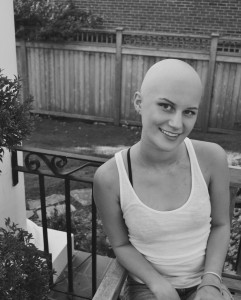
Post_Eloise McIntosh_2016 Spring CCM NewsletterMy name is Eloise McIntosh. I am 16 years old and two years ago, over the summer between grade 9 and grade 10, I was diagnosed with stage IIb Hodgkin lymphoma.

It started when I was on a youth adventure trip in Hawaii. Three weeks in, I got sick on a 12-mile hike to our camping destination. When I was still sick a week later, the doctors in Toronto tested for infectious diseases and the mono virus. I also had a chest x-ray to test for pneumonia. That is when they discovered it: a mass in my esophagus right near my trachea.

There are all kinds of terrifying things about getting a childhood cancer diagnosis. I had never even spent time in a hospital before and I had to have surgery right away. Chemotherapy was the worst experience of my life. They put me on steroids which caused my face to get fat and I felt angry all of the time. And when they told me that I would have to meet with a fertility specialist, that definitely freaked me out.

But there are also the trials and tribulations that come with being 14 years old. I was worried about my social life and missing out on my high school experience. As a teenage girl, the thought of losing my hair was obviously a huge concern for me. In fact, I did lose all of my hair… and my eyebrows and eyelashes. My leg hair completely fell out. I felt naked and unprotected. My wig became, and still is, part of my ability to feel somewhat normal, but probably the biggest contributor to my emotional well-being was how supported I was by my friends and family.

Both my parents and my younger brother and sister were around me all of the time. My aunts, uncles and cousins visited often and they became “my posse.” And at least one of my friends from school was with me during every chemotherapy treatment. I never felt alone and I realize how lucky I was. Many families need to travel for treatment—to Toronto, Ottawa or one of the five big cities with a major children’s hospital. I saw lots of kids in treatment with just one parent sitting beside them while the other was far away. Young kids and teenagers separated from their friends and siblings. I’m sure it was a very isolating experience for them.

That is why I agreed to be the keynote speaker at the upcoming POGO gala to benefit kids with cancer. Funds raised will support POGO’s mission to ensure all children with cancer, and their families, have equal access to the best care—no matter where in Ontario they live.

I hope to meet you all at the event on May 7th, taking place at the Liberty Grand Entertainment Complex in Toronto (you can find out more here: www.pogo.ca/gala). If you cannot make it, I hope you will consider showing your support by making a donation to my campaign to support families.

Thank you so much!

Sincerely,
Eloise

Eloise McIntosh made this speech at the POGO Gala in 2016. She is now the co-founder of The Good Hood Club, a loungewear company dedicated to championing childhood cancer, most notably through donating 50% of its profits to pediatric oncology initiatives.

Posted in Misc

POGO Research Education Days Spur on Successive Generations of Pediatric Oncology Researchers

Posted on January 13, 2016 by admin

POGO’s 2016 Research Education Day provides graduate students, post-doctoral fellows, clinical fellows and new investigators with the opportunity to gain practical skills and advice to build a research career in pediatric oncology. Topics at this one-day event include: how to build a strong research team and work through the associated challenges; work-life balance; inter-disciplinary insights into applied research; and how to become a leader in the field. In a panel discussion on mentorship, researchers will share their experiences first as mentees and later as mentors. Participants can also attend two workshops: To the top of the Pile: Writing a Stand Out Grant Application and What’s Hot and What’s Passé in Pediatric Oncology Research.

POGO provides continuing education that enables healthcare professionals to remain at the forefront of the ever- and rapidly advancing field of pediatric oncology.

The 2016 POGO Research Education Day takes place Wednesday, April 13, 8:00 a.m. –  4:30 p.m. at St. James Cathedral, 54 Church St, Toronto. Get the details!

To subscribe to the POGO Research Unit distribution list contact Rachelle Marek: rmarek@pogo.ca. 

Posted in Misc

Canadian Oncology Nursing Day

Posted on June 26, 2015 by admin

The annual Canadian Oncology Nursing Day provides an opportunity for nurses across the country to host educational sessions on new an important oncology nursing topics and to celebrate the numerous contributions nurses make to the field of oncology.

On Thursday, April 7th, 2015, POGO and SickKids co-hosted the 2nd Annual Garron Family Cancer Centre Visiting Scholar Program featuring:

Kathleen Ruccione, PhD, MPH, RN, CPON, FAAN
Nurse Researcher
Children’s Center for Cancer and Blood Diseases
Children’s Hospital Los Angeles
Professor of Clinical Pediatrics
University of Southern California

To watch an archived video of the day’s presentations, please click here. Username & password: COND2015.  Please click here to view the event program and speakers.


Posted in Misc | Tagged canadian oncology nursing day, pediatric oncology nursing

Post navigation

← Older posts
Newer posts →

Donate

Blog

Education Portal
Survivor Conference
All Categories

Categories

Newsletter Sign-Up

  Please leave this field empty
  

@POGO4Kids

Twitter feed is not available at the moment.

Follow @POGO4Kids

Quick Links

  • For Professionals
    • Read Cancer Care Plan
    • Review our Guidelines
    • Request Research Data
  • Families & Kids
    • Get POGO AfterCare
    • Connect with a POGO Nurse
    • Get Care Closer to Home
  • For Survivors
    • Find Local Resources
    • Set Goals for your Future
    • Educate Yourself
  • Get Involved
    • Host an Event for POGO
    • Volunteer with POGO
    • Partner with POGO
  • About Us
    • Our Mission and Vision
    • Childhood Cancer Care Plan
    • POGO Recognition Awards
    • POGO Land Acknowledgement
    • Diversity, Equity, Inclusion
    • Our Board
    • Our Partners
    • Our Donors
    • Privacy
    • Accessibility
    • Reports
    • Newsroom
    • Job Opportunities
    • Senior Leadership Team
  • Programs & Support
    • Patient Care Programs
    • Financial Assistance
    • Survivor Care
    • Cancer Resources
    • Inspiring Stories
    • Clinical and Program Advisory Committees
  • Education
    • POGO Multidisciplinary Symposium on Childhood Cancer
    • POGO Virtual Education
    • POGO AfterCare Education Day
    • POGO Satellite Education Day
    • Resources to Support Indigenous Families
  • Healthcare Practice
    • Pediatric Oncology Nursing
    • Clinical Practice Guidelines
    • POGO Satellite Manual
    • Pediatric Palliative Care
  • Research & Data
    • 2020 POGO Surveillance Report
    • POGO Research Unit
    • POGO Databases
    • Data Reports
    • Data Requests
  • Get Involved
    • Pajamas and Pancakes
    • Birthday Parties for POGO
    • Events
    • Volunteer
  • Ways to Give
    • Donate
    • Monthly Donations
    • Gifts of Stock and Securities
    • Become a Corporate Partner
    • Gifts in Honour/Memory
    • Legacy Gifts
    • Shop Online/Earn Cash Back

©2022 Pediatric Oncology Group of Ontario

480 University Avenue, Suite 1014 | Toronto, Ontario, M5G 1V2, Canada | Charitable Registration Number: 871067245RR0001 |
1-855-FOR POGO (367-7646) | Contact Us | Website Privacy Policy | Website Disclaimer | Satellite Manual Disclaimer |