
Blog
Dr. David Malkin: New Approaches in Childhood Cancer
New Cures and Approaches to the Diagnosis and Treatment of Childhood Cancer
Two notable advancements in the diagnosis and treatment of childhood cancers are the science of genomics (how genetic changes occur in tumour cells) and the use of developing cancers in model organisms, such as the zebra fish, in order to develop new drugs to test and translate to human use. POGO Medical Director Dr. David Malkin discusses how now, more than ever, it is important to develop and fund collaborative research groups, across Canada and internationally, in order to catalyze significant leaps forward in the field of pediatric oncology.
David Malkin, MD, FRCSC is the POGO Medical Director and POGO Chair in Childhood Cancer Control and Professor of the Department of Paediatrics and Medical Biophysics, School of Graduate Studies at the University of Toronto. He is also a Senior Staff Oncologist of the Haematology/Oncology department for the Hospital for Sick Children. He spoke at the 2013 POGO Multi-Disciplinary Symposium on Childhood Cancer.
Straight Talk about Childhood Cancer is POGO’s series of video shorts featuring the insights of experts whose leading-edge work impacts the care, treatment and quality of life of childhood cancer patients, survivors and their families.
Eloise’s Story
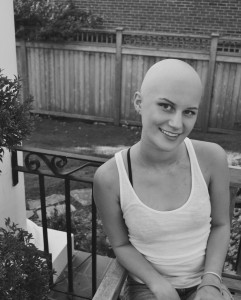 My name is Eloise McIntosh. I am 16 years old and two years ago, over the summer between grade 9 and grade 10, I was diagnosed with stage IIb Hodgkin lymphoma.
It started when I was on a youth adventure trip in Hawaii. Three weeks in, I got sick on a 12-mile hike to our camping destination. When I was still sick a week later, the doctors in Toronto tested for infectious diseases and the mono virus. I also had a chest x-ray to test for pneumonia. That is when they discovered it: a mass in my esophagus right near my trachea.
There are all kinds of terrifying things about getting a childhood cancer diagnosis. I had never even spent time in a hospital before and I had to have surgery right away. Chemotherapy was the worst experience of my life. They put me on steroids which caused my face to get fat and I felt angry all of the time. And when they told me that I would have to meet with a fertility specialist, that definitely freaked me out.
But there are also the trials and tribulations that come with being 14 years old. I was worried about my social life and missing out on my high school experience. As a teenage girl, the thought of losing my hair was obviously a huge concern for me. In fact, I did lose all of my hair… and my eyebrows and eyelashes. My leg hair completely fell out. I felt naked and unprotected. My wig became, and still is, part of my ability to feel somewhat normal, but probably the biggest contributor to my emotional well-being was how supported I was by my friends and family.
Both my parents and my younger brother and sister were around me all of the time. My aunts, uncles and cousins visited often and they became “my posse.” And at least one of my friends from school was with me during every chemotherapy treatment. I never felt alone and I realize how lucky I was. Many families need to travel for treatment—to Toronto, Ottawa or one of the five big cities with a major children’s hospital. I saw lots of kids in treatment with just one parent sitting beside them while the other was far away. Young kids and teenagers separated from their friends and siblings. I’m sure it was a very isolating experience for them.
That is why I agreed to be the keynote speaker at the upcoming POGO gala to benefit kids with cancer. Funds raised will support POGO’s mission to ensure all children with cancer, and their families, have equal access to the best care—no matter where in Ontario they live.
I hope to meet you all at the event on May 7th, taking place at the Liberty Grand Entertainment Complex in Toronto (you can find out more here: www.pogo.ca/gala). If you cannot make it, I hope you will consider showing your support by making a donation to my campaign to support families.
Thank you so much!
Sincerely,
Eloise
Eloise McIntosh made this speech at the POGO Gala in 2016. She is now the co-founder of The Good Hood Club, a loungewear company dedicated to championing childhood cancer, most notably through donating 50% of its profits to pediatric oncology initiatives.
Dr. Ellen Greenblatt: Female Fertility Concerns for Survivors
Dr. Ellen Greenblatt: Female Fertility Concerns for Survivors
It is crucial for childhood cancer patients to remember that life does go on after cancer. Understandably, fertility is an important aspect of that. Cancer treatments, however, can jeopardize reproductive health, most notably due to certain chemotherapy agents, particularly the class called alkylating agents that can kill off eggs in women and sperm in men. Radiation treatment to the pelvis can also affect ovarian function or the ability for the uterus to carry a pregnancy.
Despite such concerns, Dr. Greenblatt assures young survivors that there are many therapies that are less toxic and that pregnancy after cancer is not associated with a higher risk of abnormalities in children. She recommends visiting a reproductive endocrinologist and infertility centre if you have undergone treatment yourself. While such measures are recommended, Dr. Greenblatt provides a healthy reminder: all women, not only survivors, must think of family planning as planning their family rather than leaving it up to chance.
Ellen Greenblatt, MD, FRCSC is the Medical Director for the Centre for Fertility and Reproductive Health at the Mount Sinai Hospital and Associate Professor of the Department of Obstetrics and Gynaecology at the University of Toronto. She spoke at POGO’s 2013 Survivor Conference: Life after Childhood Cancer.
Straight Talk about Childhood Cancer is POGO’s new series of video shorts featuring the insights of experts whose leading-edge work impacts the care, treatment and quality of life of childhood cancer patients, survivors and their families.
Government of Canada increases duration of Employment Insurance compassionate care benefit
Claimants can now collect up to 26 weeks of benefits, up from 6 weeks.
Excerpted from Government of Canada Press Release
January 4, 2016 – The Honourable MaryAnn Mihychuk, Minister of Employment, Workforce Development and Labour, today highlighted the coming into force of a previously announced increase in the duration of the Employment Insurance (EI) compassionate care benefit, which will provide additional financial security to Canadian workers and their families in times of need.
The Minister also said today that the Government will work towards providing more generous leave for caregivers in the future. The Government has committed to making the compassionate care benefit more flexible, easier to access and more inclusive, she said.
Compassionate care benefits provide temporary income support to eligible individuals who must be away from work to provide care for a gravely ill family member at risk of death.
Effective January 3, 2016, the enhanced benefit, announced in 2015, allows claimants to collect up to 26 weeks of benefits, up from the current 6 weeks. Further, the period during which benefits can be taken is expanded to 52 weeks (up from 26 weeks). Benefits can be shared between family members.
Eligibility for compassionate care benefits remains the same, including the requirement for a medical certificate signed by a doctor attesting to the family member’s condition.
Corresponding changes to the Canada Labour Code will come into force at the same time to ensure that the jobs of employees in federally regulated enterprises remain protected while they avail themselves of compassionate care benefits under the EI program.
Related Topics
- Learn about the financial assistance POGO provides to families
- Visit Service Canada to get the most up to date information about Employment Insurance compassionate care benefits
Ontario Making Hospital Parking More Affordable
Ontario hospital parking discounts came into effect October 1, 2016!
On January 18, 2016 Ontario’s Ministry of Health and Long-Term Care issued the following press release:
As of October 1, 2016, hospitals that charge more than $10 a day for parking will be required to provide 5-, 10- and 30-day passes that are:
- Discounted by 50 per cent off their daily rate
- Transferable between patients and caregivers
- Equipped with in-and-out privileges throughout a 24-hour period
- Good for one year from the date of purchase.
Ontario consulted with patients, patient advocacy groups, hospitals and the Ontario Hospital Association to find a fair plan that reduces the financial burden of parking fees for patients and their visitors.
Between now and October 1, 2016, hospitals will work directly with their Patient and Family Advisory Councils to implement this new policy, ensuring that it is well promoted and easy to understand. Each hospital will provide details on its specific parking policy and discounts.
Approximately 900,000 patients and visitors – including 135,000 seniors – are expected to benefit from reduced parking fees each year.
Saving patients and their loved ones money on hospital parking is part of the government’s plan to build a better Ontario through its Patients First: Action Plan for Health Care, which is providing patients with faster access to the right care, better home and community care, the information they need to stay healthy and a health care system that’s sustainable for generations to come.
” Parking fees should never be a barrier for patients when they go to the hospital. With today’s announcement, we are providing relief from the high cost of parking at some hospitals in Ontario. By making parking more affordable for patients and their loved ones who visit the hospital often, we are helping to reduce the burden of parking fees and putting patients first.”
– Dr. Eric Hoskins, Minister of Health and Long-Term Care
” We are thrilled that our concerns around the high cost of hospital parking have been addressed in a meaningful way that will help defray the cost of hospital parking for families of children with cancer in Ontario. You heard our voices, included us in the consultation, and have come up with a plan that reflects that in a very positive way. Thank you.”
– Susan Kuczynski, Member of Ontario Parents Advocating for Children with Cancer
QUICK FACTS
- The Ministry was pleased to have consulted with a number of hospitals and the Ontario Hospital Association in regards to parking fee changes in Fall 2015
- The Ministry will require other hospitals that do not own their own lots to make best efforts to influence their partners, like municipalities and private operators to cap or cut parking fees for those who must visit the hospital frequently.
- In Ontario 45 Hospitals currently offer free parking and 54 charge $10 or less per day. It is estimated that 36 hospitals charge more than $10 a day.
- The government is directing hospitals not to raise their daily parking rates for the next three years starting today.
RELATED LINKS